
Quick Summary
Artificial intelligence has transformed both cyber defense and cybercrime. In 2025, AI-driven phishing, deepfake impersonation, and adaptive malware are increasing globally by more than 260% year-over-year (Verizon DBIR, 2025).
For Cincinnati small businesses, staying secure means adopting AI-enabled cybersecurity tools, continuous employee education, and partnering with a managed security provider like BlueHat to detect and neutralize threats before they cause damage.
AI: A Double-Edged Sword in Cybersecurity
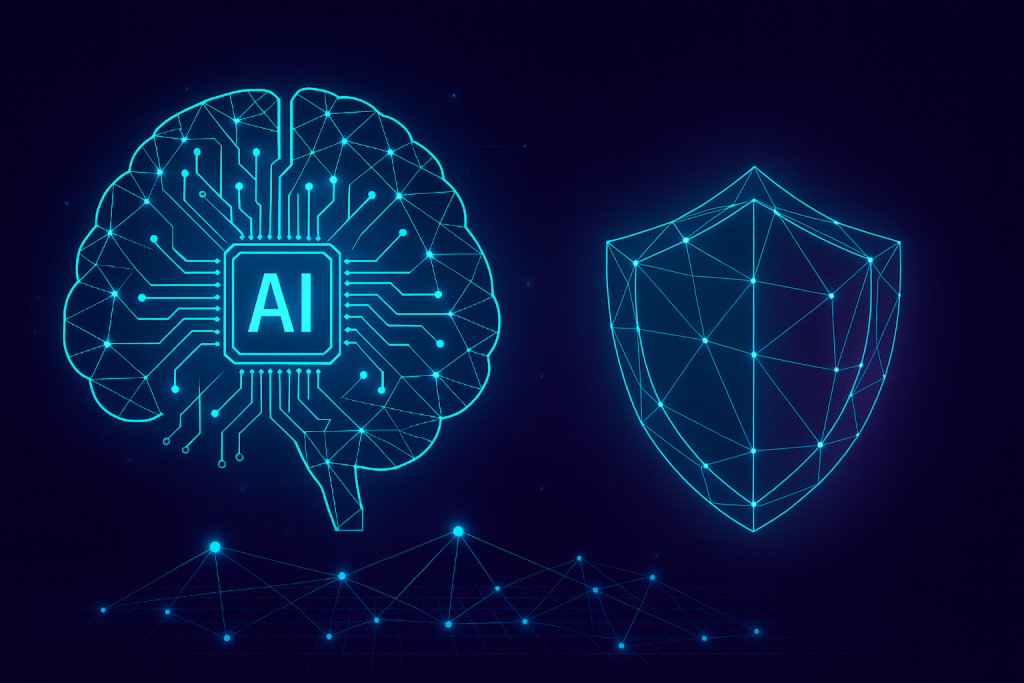
AI is revolutionizing the world of technology — but it’s also making cybercrime more sophisticated than ever. On one hand, AI helps defenders automate detection, analyze threats faster, and predict vulnerabilities before they’re exploited. On the other, hackers use those same capabilities to create smarter, more targeted attacks.
For small and mid-sized businesses (SMBs) in Cincinnati, this evolution means traditional antivirus and firewalls are no longer enough. The next generation of attacks uses machine learning, natural language processing, and automation to exploit human behavior and software flaws with alarming precision.
How Hackers Use AI to Their Advantage
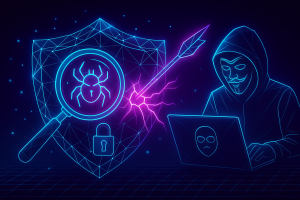
Cybercriminals are now weaponizing artificial intelligence in ways that were once unimaginable. Here are the top trends shaping the threat landscape:
1. Deepfake Phishing and Voice Scams
AI tools can now clone an executive’s voice in under 60 seconds. In 2024, a British company lost $240,000 after an employee transferred funds following a call from a “CEO” whose voice was generated by AI (Forbes Tech Council, 2024).
Actionable Tip:
Train employees to verify all payment requests through a second communication channel (e.g., Slack or phone verification).
2. Adaptive Malware and Polymorphic Code
Unlike traditional malware, AI-powered malware can change its own code every time it’s detected. Gartner reports that polymorphic malware attacks have increased by 300% since 2023. This makes signature-based detection nearly obsolete.
Actionable Tip:
Implement AI-driven endpoint detection and response (EDR) tools that can analyze behavior patterns rather than just file signatures.
3. Automated Vulnerability Scanning
Hackers now deploy bots that use machine learning to scan the internet for exploitable weaknesses. These tools can identify an unpatched server faster than a human IT team can respond.
Actionable Tip:
Schedule monthly vulnerability scans and annual penetration tests to stay ahead.
4. AI-Powered Phishing Emails
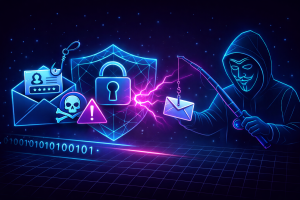
Gone are the days of poorly written phishing messages. Using large language models, attackers now craft emails that mimic your tone, style, and branding. According to Proofpoint (2025), AI-generated phishing emails have a 43% higher success rate than traditional ones.
Actionable Tip:
Deploy AI-based email security tools that analyze communication behavior, not just keywords.
(Internal link: /managed-services/email-security-service-cincinnati/)
How AI Helps Businesses Defend Themselves
The good news: AI isn’t just a threat — it’s also your best line of defense. When properly implemented, AI-driven cybersecurity dramatically improves detection time, reduces false positives, and allows small businesses to compete with enterprise-level protection.
1. Predictive Threat Intelligence
AI systems analyze billions of data points across global networks to identify potential risks before they reach your business. According to IBM’s Threat Intelligence Index (2025), companies using predictive security reduced breaches by 43%.
Actionable Tip:
Adopt a managed service provider (MSP) like BlueHat that integrates predictive AI analytics into its cybersecurity stack.
2. Automated Detection and Response
AI tools can now isolate infected devices and neutralize threats automatically — often within seconds. Cisco’s 2025 Security Report found that AI-powered systems detect breaches 72% faster than human-only security teams.
Actionable Tip:
Invest in automated endpoint management and real-time alerting to minimize downtime and data loss.
3. User Behavior Analytics (UBA)
AI tools learn what “normal” activity looks like for each user and flag anomalies, such as logging in from a new device or accessing files outside of business hours. This helps prevent insider threats and stolen credential attacks.
Actionable Tip:
Enable behavior analytics within your existing monitoring platform or through BlueHat’s managed security services.
The Local Impact: Why Cincinnati SMBs Are Targeted
Cincinnati’s growing business ecosystem — including manufacturing, healthcare, and financial sectors — has made it a prime target for cybercrime. SMBs often assume they’re “too small” to attract attention, but attackers use automation to scan entire regions for easy entry points.
Local businesses in Ohio reported a 34% rise in cyber incidents in 2024 (Ohio Cybersecurity Center), many caused by phishing and weak password management. These industries are especially at risk:
- Manufacturing: Supply chain and intellectual property theft
- Healthcare: HIPAA violations and ransomware on patient data
- Finance: Credential theft and business email compromise (BEC)
Practical Steps SMBs Can Take Today
- Adopt AI Security Tools
Implement solutions that include predictive analytics, anomaly detection, and automated incident response. - Update Software Regularly
Over 25% of breaches in 2025 stemmed from unpatched vulnerabilities. Schedule automatic updates or managed patching services. - Educate Your Employees
Conduct quarterly cybersecurity training focused on AI-driven scams, deepfakes, and phishing. - Use Multi-Factor Authentication (MFA)
MFA blocks 99.9% of account breaches (Microsoft, 2025). Require it for every login. - Backup Data Offsite
Cloud-based, encrypted backups ensure your data is recoverable in minutes, not days. - Partner With a Local Expert
BlueHat’s Cincinnati-based cybersecurity team uses AI-driven tools and human oversight to protect businesses 24/7.
AI’s Future in Cybersecurity: The Human Element Still Matters
While AI enhances defense, it can’t replace human judgment. A successful cybersecurity strategy in 2025 blends intelligent automation with skilled professionals who understand context and decision-making.
BlueHat combines AI-enabled tools with a local, hands-on team to provide Cincinnati businesses with adaptive, personalized protection.
Conclusion
AI is redefining cybersecurity — for both attackers and defenders. The same technology that fuels automation and innovation can, in the wrong hands, become a weapon. The best way forward for Cincinnati SMBs is to stay ahead of the curve: adopt intelligent systems, educate your team, and partner with trusted experts like BlueHat.
Cyber threats are evolving — but so is your defense.
FAQ
How is AI used in cyberattacks?
Hackers use AI to create convincing phishing content, scan for vulnerabilities, and develop self-adapting malware that evades detection.Can small businesses afford AI cybersecurity tools?
Yes. Partnering with a managed service provider like BlueHat offers enterprise-level AI protection for a fraction of the cost.